23. Oktober 2026Geneva
What AI must prove to earn the trust of investment professionals
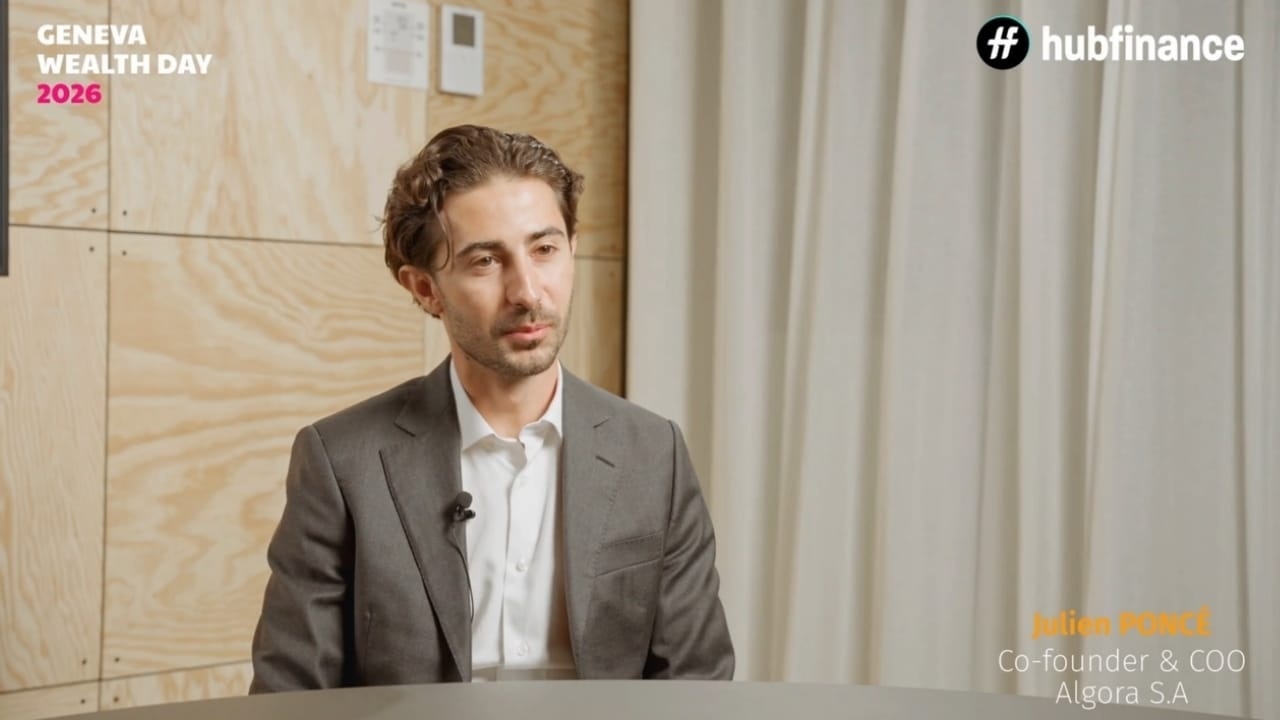
At Geneva Wealth Day, held on 17 September 2026 at Westhive in Geneva, Hubfinance interviewed our co-founder and COO Julien Poncé on what it takes for AI to become a lasting part of Wealth Management. Here are the three questions and his answers.
Question 1
AI is now everywhere in discussions about Wealth Management. Beyond the hype, what does an AI tool really have to prove before an investment professional can trust it in their daily work?
I think there are five main conditions that this question comes down to.
- Scope. What kind of data can the platform, the AI system, access, and what happens to that data?
- Traceability. Can I trace every single data point back to its source?
- Context. Does the system know my portfolio, the client’s mandate, my client in general and the way the institution in question works?
- Reproducibility. Being able to generate the same answer, the same output, again at a different point in time. The problem is that if a system works very well once, that is good once, but you cannot reuse it. This is a truly essential condition: it decides whether the tool can be built into your processes or not.
- Human authorship. Everything the system generates has to be attached to a human, especially in this industry. It comes down to accountability: who is responsible for what is created and for everything that follows from it.
Question 2
Wealth Management professionals handle particularly sensitive data. What guarantees should they demand before allowing an AI solution to access their internal data?
There are four questions you should always ask.
- Where is my data processed? In Europe we have fairly strict rules on this, so it really is the first question to ask.
- Is my data stored anywhere?
- Is anyone training on my data? This follows directly from the previous question.
- Who has access to that data?
More generally, our advice is to get these answers in writing. If what comes back is a marketing page, that is already an answer, and a rather problematic one. Ideally, ask to see the architecture behind it, so you really understand what happens to your data.
This remains the essential question. As long as it is not answered, you cannot move on: the other conditions that follow no longer matter. It is the real blocking point.
Question 3
In the coming years, what will make the difference between AI tools that truly become part of investment professionals’ daily work and those that remain mere technology demos?
I think it all comes down to two conditions.
The first is reproducibility. If a system does not let you reproduce the same kind of output at a later point, whatever the timeframe, the next day, the next week or the next month, it will be hard to build into a workflow or a process. And if you cannot build it into one of your processes, you cannot organise your team around it. At the very least, you will not be able to hand that process over to someone else later on.
That leads to the second condition: it has to make economic sense. You can probably use one of the best models available today, if not the best, for almost any task. But if that means one of your reports costs you 50 dollars, you will most likely go back to doing it exactly the way you did before, except that this time it has become even more expensive.
And then you need real results: fewer errors or time saved. That is something you really have to measure, as a return on investment.
Watch the full interview (in French) on Hubfinance: Julien Poncé (Algora) : ce que l’IA doit prouver pour gagner la confiance des professionnels